If strands of hair have been showing up more frequently on your pillow, comb, or bathroom floor, there might be more than just stress or diet behind it The invisible culprit floating all around us — air pollution — could be silently triggering your hair fall woes.
From vehicle exhaust and construction debris to factory smoke and indoor contaminants, cities across India are grappling with a serious air pollution challenge. But while we often worry about what polluted air does to our lungs and skin, we hardly think about its impact on our hair. Let’s break down how exactly air pollution causes hair loss and what you can do to protect your precious strands.
The Air We Breathe, The Hair We Lose
Air pollution isn’t just about one or two harmful particles. It’s a dangerous mix of:
- Particulate Matter (PM 2.5 and PM 10)
- Nitrogen dioxide (NO2)
- Sulphur dioxide (SO2)
- Carbon monoxide (CO)
- Ozone (O3)
- Dust and smoke
Each time we head outdoors, these airborne particles cling to our scalp and strands. Your scalp works like the foundation of a house — if the base is weak or polluted, everything built on top starts to suffer. In the same way, when your scalp gets damaged by pollution, your hair roots weaken, and the strands begin to fall.If the soil becomes toxic, how will the plants grow strong and healthy?
How Air Pollution Damages Your Hair
Here are the direct ways in which polluted air leads to hair fall and damage:
Scalp Irritation and Inflammation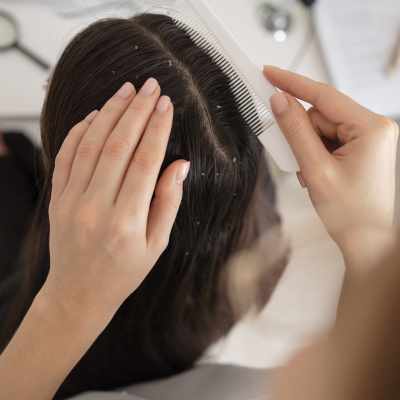
Scalp Irritation and Inflammation
When pollutants block your hair follicles, they hinder the flow of oxygen to the roots.This leads to inflammation, itching, dandruff, and even folliculitis. When your scalp gets irritated or swollen, it becomes difficult for new hair to grow properly — like trying to grow a plant in dry, cracked land.
Oxidative Stress
Free radicals generated from pollutants break down proteins and lipids in the hair shaft. This damages the hair structure, leaving it dry, fragile, and easier to snap or split.
Blocked Hair Follicles
Dust and grime can mix with your natural scalp oils and block follicles, slowing down hair growth or completely stopping it in severe cases.
pH Imbalance
Pollution disturbs the natural pH of your scalp. A disrupted pH can cause excess oil production or dryness — both of which contribute to hair fall.
Premature Aging of Hair
Air pollution accelerates greying and weakens melanin production. So, if you’re seeing grey strands before 30, it’s not always genetics — the environment plays a big role.
Cities with the Worst Hair Pollution Problem
From Delhi to Mumbai, Kolkata to Bengaluru — Indian metros are ranked among the most polluted cities globally. In these cities, stepping out without hair protection is like inviting damage.
Daily exposure to traffic pollution, open drains, dust storms, industrial zones, and even cigarette smoke can take a heavy toll on your scalp health.
Signs Your Hair Is Affected by Pollution
- Hair feels sticky or dirty even after washing
- Dandruff that doesn’t go away with shampoo
- Constant itching or burning scalp
- Sudden increase in hair fall
- Hair that looks dull, dry, or lifeless
- More split ends than usual
If you’re experiencing these symptoms and live in a polluted area, your hair is crying out for help.
What You Can Do: Pollution-Proof Your Hair
Don’t worry — while you can’t completely avoid air pollution, you can definitely take steps to protect your hair.
Cover Your Hair
Use a cotton scarf, hoodie when stepping out.

Gentle Cleansing
Wash your hair 2–3 times a week with a soft, herbal or ayurvedic shampoo. This helps remove dust, sweat, and pollution particles without making the scalp too dry. Avoid harsh products that lather excessively — they often clean too deeply and remove essential oils your scalp needs.
Oil Therapy
Apply warm coconut or almond oil before washing to create a protective layer. Oils also soothe scalp inflammation.

Antioxidant-Rich Diet
Eat foods high in Vitamin C, E, Zinc, and Omega-3 — they fight oxidative stress from within. Think amla, spinach, walnuts, and flaxseeds.

Aloe Vera or Neem Rinse
Both are natural detoxifiers for the scalp. You can use fresh aloe gel or neem water as a pre-shampoo treatment.
Don’t Skip Conditioning
Pollution dries out the hair shaft. A good conditioner or hair mask helps retain moisture and improves hair elasticity.
Myths About Pollution and Hair Fall
Let’s bust some common myths:
Myth: “I hardly step out, so my hair is safe from pollution.”
Truth:Indoor air isn’t always as pure as it seems, and it can still affect your hair health Smoke from the kitchen, agarbatti, dust on fans and furniture, and closed windows can trap dirty air — all of which quietly harm your scalp and hair health.
Myth: “Washing hair daily prevents pollution damage.”
Truth: Overwashing can dry out your scalp. Balance is key.
Myth: “Wearing a helmet protects hair from pollution.”
Truth: Helmets trap sweat and dirt. Make sure to wear a fresh cotton scarf or cap beneath your helmet to protect your hair.
When to See a Doctor
If your hair fall is severe, patchy, or accompanied by scalp boils, don’t self-treat. Visit a dermatologist or a hair expert for professional evaluation and treatment. In cities like Delhi, Mumbai, and Kolkata, many hair clinics now offer scalp detox services specially targeted for pollution damage.
Conclusion
The world around us is shifting faster than ever — from the air we breathe to the spaces we live in, and our hair often pays the hidden price., and so is the health of our hair. Air pollution may be invisible, but its damage is very real — especially in urban India. Protecting your scalp from pollutants is no longer a luxury but a necessity.
And remember, air pollution is just one of the many factors that affect hair health. Learn more about how the Environment causes hair fall, understand how Stress causes hair fall, discover the truth behind Hard water causes hair fall, and uncover how Smoking causes hair loss. By being aware of all these triggers, you can take better control of your hair health — one strand at a time.